Posts

KENYA'S BET ON CLIMATE FINANCE

How one African nation is building the architecture to unlock billions in green investment and why getting it right matters for the whole continent. By Brian Onali Nduw The math is stark. Keeping global warming within manageable limits requires somewhere in the range of USD 900 billion in clean energy investment every single year through 2030. Developing nations alone need between USD 70 and USD 100 billion annually just to adapt to climate impacts they are already living with, rising seas, erratic rainfall, prolonged droughts, before even touching the question of reducing their own emissions. The money, at least in theory, exists. Global climate finance flows have grown substantially over the past decade. The problem is where it ends up. Sub-Saharan Africa, home to some of the world’s most climate-vulnerable populations, captures only around 3% of total global climate investment. Meanwhile, East Asia and the Pacific attract roughly a third of all flows, and Western Europe take...

A REFLECTION ON CLIMATE JUSTICE, IPCC SCIENCE, AND THE WEIGHT OF MALAWI'S BURDEN

Image
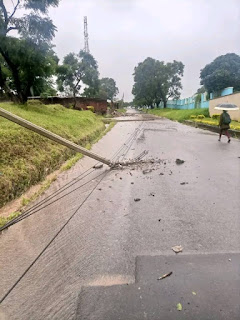
By Brian Onali Nduw There is something profoundly humbling about standing before a room full of young people and telling them the truth about their planet. Not a softened, palatable version. The full truth. The kind that lives in peer-reviewed reports, that is argued over in Swiss conference rooms, and that eventually washes up, quite literally, on the shores of countries like Malawi, in the form of cyclones, droughts, and flooded roads. I am Kenyan. I came to Malawi to study, chasing knowledge across borders the way the climate crisis itself crosses them. Indifferent to where you were born or what your country emits. When the Head of the Department of Forestry and Environmental Management at Mzuzu University identified me as someone with grounding in climate finance topics and asked me to stand alongside Mr. Luke Mwakuluni, a Forest Extension Officer with the Co-operative Development Foundation of Canada, I felt both the honour and the gravity of what we were being asked to do....

DISMANTLE THE BOX, TIME IS UP

Image
Distinguished Professor Makau Mutua in one of the recent columns-local daily, shamed the no-ugali restaurants. The ‘high-end’ restaurant in Nairobi, Kenya, and in the African continent incapacitated the Prof’s big appetite for sirloin, sukuma-wiki, and ugali . He drove home for a delicious lunch of matoke. As a good student, I got the assignment - the subject: Decolonization of the Black African mind. Africans’ confinement to think within the box, proves detrimental. Our heroes thought outside. We’ve got no name to the box owner we are confined to think within or the one we’re urged to think out of. Throwing away that box - start plain thinking and self-introspection, is the surest way. Things have changed and keep on changing. Static thinking within and around the box makes us not creative with no vision as others adjust and embrace changes before our naked eyes. Education, religion, and politics affect our thinking—agents of thought formatting. Yes, our education system emp...

LET US BROADEN OUR VALUES, RECONSIDER CLEAR-CUT LOGGING

Image
Photo: File ASSIGNMENT: The regard to the recent Presidential declaration on lifting the 2018 ban on forest logging. The President of Kenya said we can no longer keep old mature trees rotting in the forest while locals suffer due to lack of timber. His move is meant to increase timber production and create jobs for the youths. Only when money is exchanged for products and services, is the transaction recognized as having economic worth in the value system inherent in the sort of economics our society has chosen. The tree only acquires value when it enters our economy by generating revenue. As an Environmentalist, I am not in support of this statement. My perspective: That one tree was a tiny element of a community of species that had evolved over thousands of years. That community is made up of trees, a minuscule percentage of the forest’s life forms. Tens of thousands of kinds of microorganisms-viruses, bacteria, fungi, protozoa-as well as bigger nematodes, worms, insects, and m...

UNVEILING THE SECRETS OF CLIMATE CHANGE: ADAPTATION, LOSS, AND DAMAGE!

Image
While on my recent school tour and speaking about Environment/Climate to passionate and unpassionate innocent pupils, I got so many questions. Questions challenging my thoughts and exciting my research notes. These questions, make me think on my feet and sometimes send me to the books for in-depth knowledge and technical know-how. Let the questions come my way! I believe I am not stupid and excuse myself to going back to my notes and recheck what I was taught in class but use my expertise and experience to respond.   “My name is Natasha and I am in Grade 4. I am passionate about Environmental management and have one question: What is this about Climate Change-Adaptation, Loss and Damage?   Hello, young environmental enthusiast! I'm here to talk to you about climate change, a big problem that affects our planet. Climate change occurs because humans release greenhouse gases into the air, which trap heat from the sun and make the Earth warmer. This warming causes many...

ENERGY OF THE FUTURE: RENEWABLE ENERGY

Image
Investing in renewables is something that should be given an extra weight across the globe for development that safeguards Mother Nature. Fossil fuels, which has been the primary source of energy, should be brought to a halt. It has affected the global economy and proved detrimental to the wellbeing of the environment – heating up the planet earth. Africa, my home continent, is associated with low development and under investment. I believe the continent can rapidly accelerate its infrastructure development and advancement by going green. Most African countries have been unable to deliver regularly occurring power access. The economic model inherited from the colonizers has failed many years after independence. My one trusted friend from Nigeria confirms to me that despite his country extracting oil reserves in enormous volumes, they still grapple with energy challenges. Another one from South Africa, informs me that his country relies on coal-fired power plants, they still...

MONSTROUS CREATURE FROM OUTER SPACE

Image
  Survival requires strategy, too. Possessing a large, complex brain endowed with the ability to look further, project ahead, into the future; anticipate the likely and possible consequences of actions thus, survival strategy of our species, Homo sapiens. Because of this foresight, making choices makes our species unique. Our species can recognize options, weighing not only their hazards but also benefits, and deliberately choosing an action that will maximize the potential for benefits while minimizing risks. This evolutionary approach has been incredibly successful for Homo sapiens and has given us a characteristic of unparalleled supremacy on Earth. I find it ironic that in this such a time of huge amplification of our brainpower through scientists, engineers, computers and telecommunication, we, humans, no longer seem capable of doing what our forefathers did routinely: assessing the hazards confronting us and choosing the best option suitable for long-term surviva...